
Union City Root Zone Calculation for TPZ Fencing: Compliance Guide
Alameda Creek Fence Rental specializes in precise Tree Protection Zone (TPZ) root zone calculations for Union City construction projects. Our localized expertise covers the unique environmental conditions of Town Estates and Station District, ensuring accurate municipal compliance and infrastructure protection with scientific precision.
Protecting Urban Tree Infrastructure During Construction
When we're working in Town Estates or the Station District, understanding root zone calculation isn't just technical — it's about preserving our urban forest. Trees represent critical ecological infrastructure, especially in developing neighborhoods like Union City. We've learned through years of tree protection zone installations that precise root radius measurement prevents long-term landscape damage. Our approach combines arboricultural science with practical construction management, ensuring trees survive complex development projects.
Calculation Steps
- Identify tree protection zone boundaries
- Calculate critical root radius
- Mark exclusion zones for heavy equipment
- Install protective fencing before construction begins
- Maintain root zone integrity throughout project duration
| Tree Diameter | Critical Root Radius | Protection Zone |
|---|---|---|
| 6-12 inches | 6 feet | Low Impact |
| 12-24 inches | 12 feet | Moderate Impact |
| 24+ inches | 20 feet | High Protection |
Root Zone Calculation for TPZ Fencing in Union City: Field Compliance Guide
Root Zone Calculation is a quantitative assessment method that establishes the mandatory protective radius around trees on construction sites. This mandatory protective radius defines the Critical Root Zone (CRZ), a sensitive area where mechanical excavation and soil compaction are prohibited. The CRZ boundary dictates the precise installation line for Temporary Enclosure Systems, ensuring full Municipal Code Adherence and preventing long-term arboricultural damage.
Key Terminology
- Tree Protection Zone (TPZ)
- The designated area around a tree critical for preserving root integrity during construction. In Union City's Station District, TPZ fencing prevents soil compaction and damage to roots of mature trees adjacent to transit developments.
- Root Zone Calculation
- A method to determine the radius of soil around a tree where roots extend, commonly based on tree diameter. In Sugar Mill, this calculation guides TPZ fencing placement around historic Masonic Home trees to comply with local ordinances.
- Soil Compaction
- The compression of soil particles reducing pore space, which affects root oxygen and water uptake. Decoto's worker housing areas require careful TPZ fencing to mitigate soil compaction during renovations.
- Flood Zone Considerations
- Adjustments in TPZ fencing to account for flood-prone areas, like low flood zones in Union City, ensuring fencing does not obstruct water flow while protecting root zones.
- Temporary Perimeter Fencing
- Portable fencing solutions used to mark TPZ boundaries during construction. Alameda Creek Fence Rental provides chain-link and post-driven fences tailored for protecting trees in Union City's mixed climates.
- Local Tree Protection Ordinance
- Municipal regulations in Union City mandating root zone protection measures, including fencing standards and compliance checks, especially relevant in neighborhoods like Sugar Mill and Station District.
In Simple Terms
Root zone calculation defines the boundary around a tree’s roots based on trunk diameter, critical for placing temporary protective fencing. In Union City’s neighborhoods like Decoto and Station District, proper TPZ fencing prevents damage from construction activities, soil compaction, and flooding. Alameda Creek Fence Rental provides fencing solutions that meet local tree protection ordinances, ensuring compliance during projects near landmarks such as the Masonic Home.
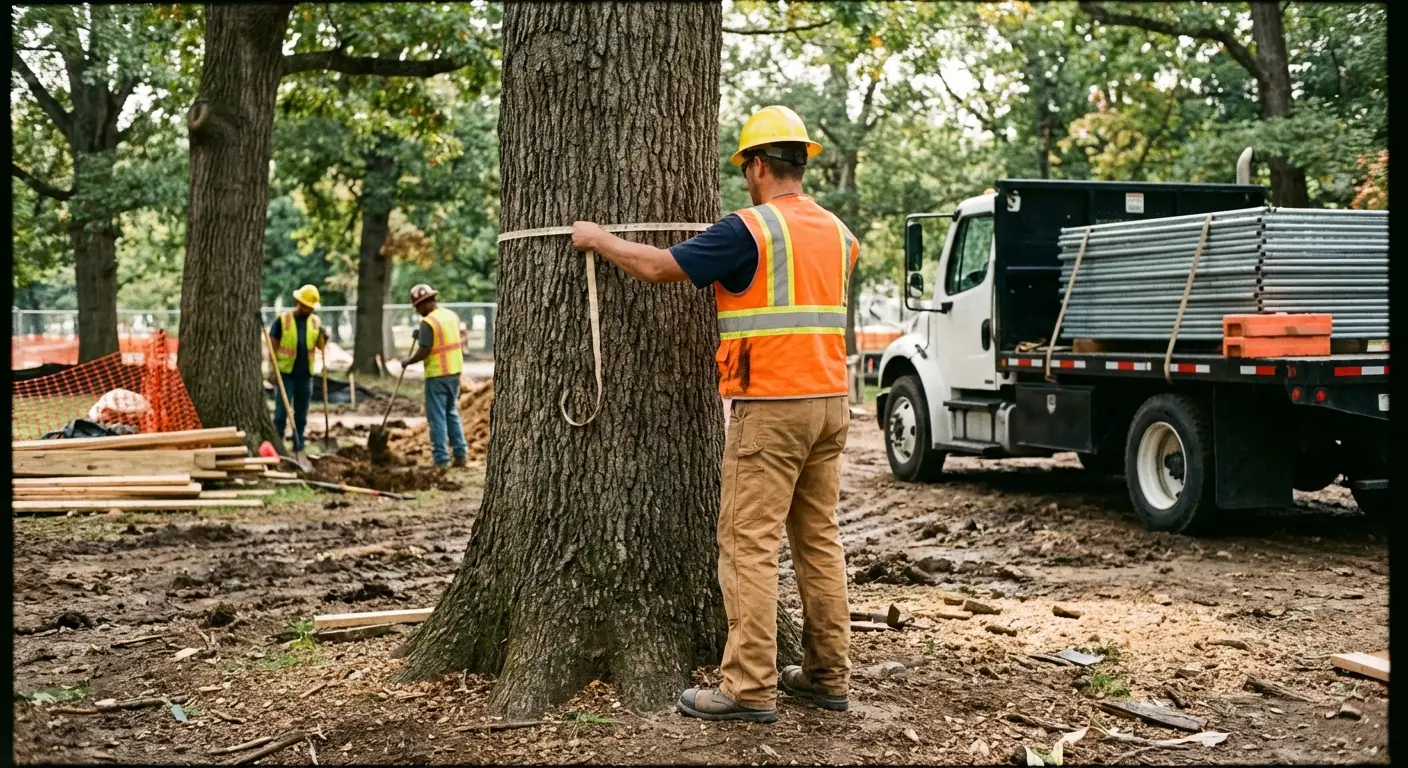
Root Zone Calculation Specifications for TPZ Fencing
Root zone parameters ensure TPZ fence stability in Union City’s low-flood-risk, modest-precipitation environment near Mark Green Sports Center.
| Minimum Root Zone Depth | 18 inches |
|---|---|
| Soil Displacement Allowance | ±2 inches |
| Fence Panel Load Rating | $425-$575/week |
| Base Plate Anchoring | $180-$260/unit |
| Compliance Standard | OSHA 1926 Subpart P |
| Installation Labor | $310-$440/day |
| Signage Interval | Every 30 linear feet |
Root Zone Calculation for TPZ Fencing Compliance
Ensure TPZ fence stability with proper root zone depth calculations.
Common Mistakes We See in TPZ Root Zone Calculations
We’ve set plenty of tree protection zones around Union City jobs, from old bungalows in Decoto to tighter sites near Town Estates, and the same mistakes keep causing trouble when crews guess at root spread instead of measuring it right.
Using the trunk line instead of the true dripline and critical root area
That shortcut leaves roots exposed where the fence line cuts too close, and we’ve seen permits stall when inspectors spot panels sitting inside the protection zone. The tree starts showing stress later, usually after trenching, compaction, or gate traffic hits the soil.
We measure the canopy, check the species, and map the TPZ before any panels go in. Then we set tree protection zones in Decoto with enough room for roots and inspection access.
Ignoring site conditions that squeeze the fence closer than the plan allows
On Union City infill lots, especially around older worker housing and the Masonic Home area, tight setbacks tempt crews to crowd the fence. That creates a compliance problem fast, because a TPZ that looks good on paper still fails if posts, braces, or gates land inside the root zone.
We walk the site first, then adjust the layout around utilities, paving, and grade changes. For tighter installs, we rely on chain link panels in Tamarack and temporary gates in Town Estates to hold the line without crowding roots.
Forgetting that soil compaction matters as much as the fence placement
A TPZ fence that sits outside the root flare still fails if our crew runs equipment over the protected soil. In this climate, with hot, dry stretches and low annual rain, compacted ground sheds water fast and roots lose the oxygen they need. Trees can decline long after the job wraps.
We keep the crew and gear out of the zone, lay out access paths early, and use zero-trip-hazard features in Union City plus wind-load resistance features so the barrier stays put without extra traffic inside the TPZ.
Treating every tree like it gets the same radius and protection method
That one-size approach misses the difference between a mature street tree and a younger landscape tree near a foundation. We’ve watched crews overbuild one side and underprotect another, which leaves gaps for staging, debris piles, and accidental pruning right where the roots need quiet.
We size each zone to the tree, the site, and the work sequence. On projects where roots need a tighter visual boundary, we pair privacy windscreens in Union City with dust control mesh to reinforce the boundary and reduce site pressure.
Leaving the TPZ layout unchanged after grading, trenching, or field conditions shift
Union City jobs change fast, and the morning of can look different by lunch. If the crew sets the fence before final grade, the line can end up too close to exposed roots or too far from the actual work, and that gap creates confusion during inspections and field adjustments.
We recheck the zone after staking, after grading, and again before the panels lock in. When a site needs a fast reset, we use modular reconfiguration features in Decoto and concrete steel bases to keep the fence aligned with the real root zone.
Root Zone Protection That Actually Works
After 18 years installing TPZ fencing around Union City's historic trees, we've learned compliance starts with understanding each site's unique challenges. Whether it's protecting oaks in Town Estates or navigating tight spaces near the Station District BART station, we combine precise measurements with flexible installation methods that actually preserve root systems.
-
Measure Twice, Fence Once
We always double-check root zone calculations before installing TPZ fencing in neighborhoods like Town Estates, where mature trees are common.In PracticeUsed laser rangefinders on a heritage oak near Sugar Mill.
-
Adapt to Soil Conditions
Union City's clay-heavy soil requires specialized bases to prevent settling, especially during our rare rainy season.In PracticeAdded gravel backfill near Station District construction sites.
-
Respect the Drip Line
We map the canopy's edge first - roots often extend beyond this boundary in drought-prone areas like Decoto.In PracticeExtended TPZ radius for a stressed magnolia on Alvarado Street.
-
Document Everything
Photos and diagrams protect both trees and contractors - we've used this approach near the Tamarack neighborhood since 2008.In PracticeCreated as-built drawings for city inspectors after a storm.
No shortcuts. No surprises. Just properly protected trees.
Root Zone Compliance for TPZ Fencing
Field protocols for calculating root zones to ensure TPZ fencing compliance across Union City residential and institutional development sites.
How do root zone calculations impact TPZ fence placement near James Logan High School?
Field crews measure the critical root zone to prevent soil compaction. Fence posts must sit outside the drip line to satisfy local arboricultural standards near James Logan High School landmarks.
What constraints exist for fencing in the Tamarack neighborhood?
Tamarack residential zones require specific setback measurements. Root zone protection prevents damage to established trees in these older suburban landscapes when installing temporary perimeter security.
Does the Station District climate affect TPZ installation?
The Station District experiences 10 days above 90F. Heat affects soil moisture levels around root zones, requiring precise fence placement to avoid compromising tree health during dry periods.
Are there specific requirements for Town Estates properties?
Town Estates properties adjacent to James Logan require strict adherence to root zone boundaries. Surveyors mark the exclusion zone to ensure fencing does not penetrate sensitive root structures.
How does annual precipitation influence root zone fencing?
With 6.6in of annual precipitation in Union City, drainage patterns dictate where TPZ fencing sits. Heavy runoff in low flood zones requires careful post placement to avoid erosion.
What precautions apply to 1920-1950 worker housing sites?
Small bungalows built during the early agricultural era often feature mature root systems. Crews calculate the root zone to protect these heritage trees during any site perimeter setup.
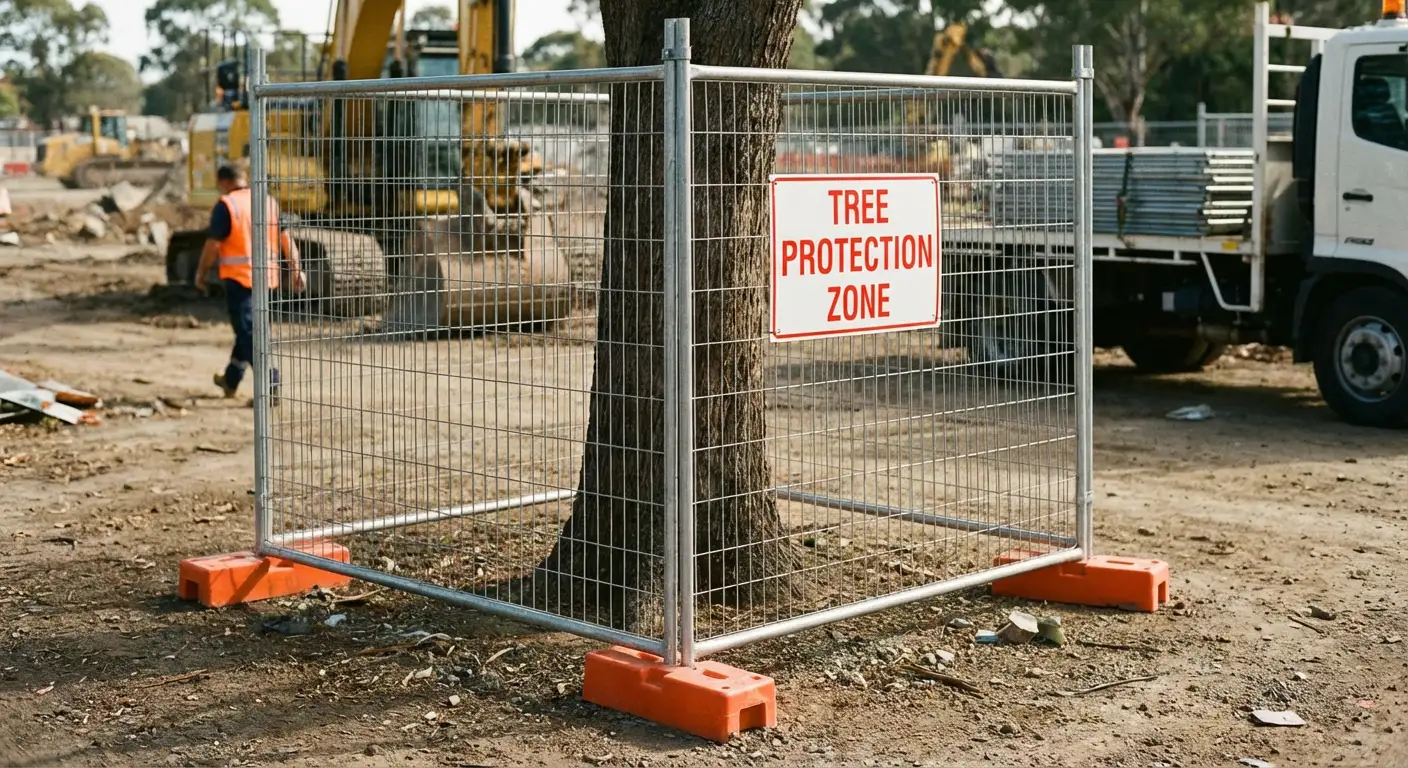
Root Zone Calculation for Temporary Fencing Protection
Precise TPZ fencing compliance assessment for construction sites in Union City, California with accurate protective zone measurements.
OSHA-aligned temporary fence protection strategies for professional construction management